




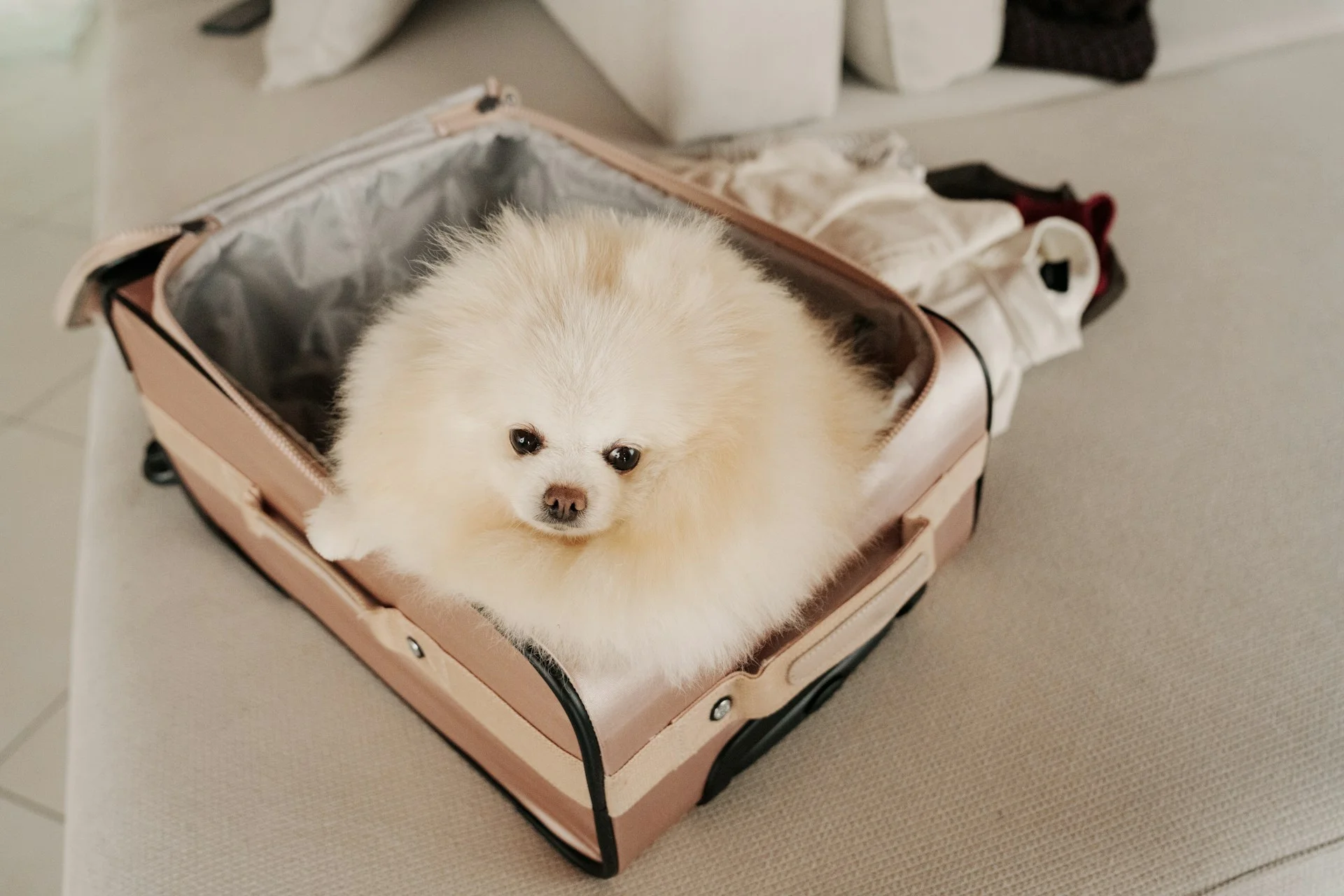
As the holiday season gets closer, lots of us are packing up to travel and spend time with family. And for many people, the dog is family too, so leaving them at home just isn’t an option. If your dog is flying home for the holidays with you, here are our tips for flying with a dog, so you both arrive calm and ready to celebrate.
Most of the work happens before the plane ever leaves the gate. Get the booking, the paperwork and the carrier right, and the flight itself is usually the easy part. We put together the tips that make the biggest difference, from picking an airline to keeping your dog calm under the seat. At the bottom you’ll find a few Amazon picks for the trip: carriers and gear first, then calming helpers for the cabin.
Before you book
1. Read the airline’s pet policy first
Pet rules change a lot from one airline to the next. Some take small dogs in the cabin, some fly pets only in the cargo hold, and some don’t take pets at all. Check the carrier size limit, any weight limit and whether your dog’s breed is accepted. Many airlines won’t fly short-nosed breeds like pugs and French bulldogs in the hold, so owners of those dogs should look for a cabin spot. If you’re flying abroad, check your destination’s entry rules too, not just the airline’s.
2. Book early and add your dog right away
Airlines allow only a few pets in the cabin on each flight, and spots go first come, first served. Book your own seat, then add your dog as soon as you can. That often means a phone call. Have your dog’s weight with the carrier and the carrier’s measurements ready, and ask what papers you’ll need at check-in. Pet fees are charged each way and vary by airline, so ask about that too. If an agent tells you something that sounds off, check it against the airline’s website.
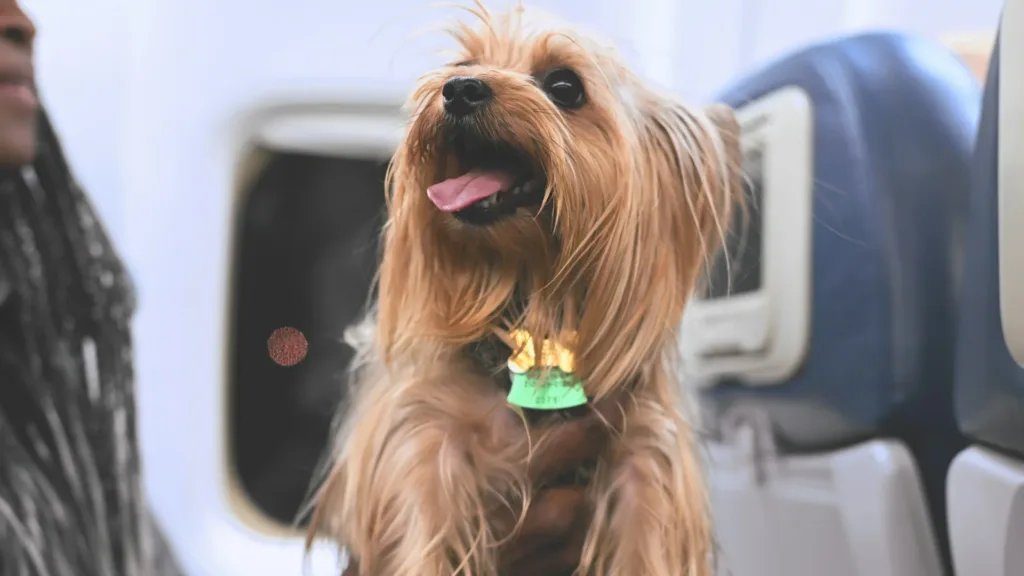
3. Choose nonstop flights when you can
Every connection means more time in the carrier and one more chance for a delay. If you need a layover, leave enough time to find a pet relief area, offer water and let your dog stretch. Flying in the hold? Skip trips in extreme heat or cold.
Paperwork and the carrier
4. Start the paperwork early
Many airlines ask for a health certificate, and for air travel the AVMA says it should be issued within 10 days of departure by a federally accredited vet. Some domestic flights don’t need one, but international trips almost always do. For travel abroad, USDA APHIS says to contact a USDA-accredited vet as soon as you decide to go, since some countries ask for extra vaccines, tests or treatments, and the certificate may need a USDA endorsement. Coming back into the US with a dog? The CDC’s rules depend on where your dog has been and where it was vaccinated, so run through its Dog Importation Navigator well ahead of time.
Keep proof of rabies vaccination, the health certificate and microchip details in one folder, with copies on your phone.
5. Pick a soft-sided carrier that fits under the seat
For the cabin, a soft-sided carrier with mesh for airflow is the usual choice, and it has to fit under the seat in front of you. Measure it against your airline’s limits before you buy. Your dog should be able to stand, sit, turn around and lie down inside. The carrier usually counts as your personal item or carry-on, so plan the rest of your bags around it.
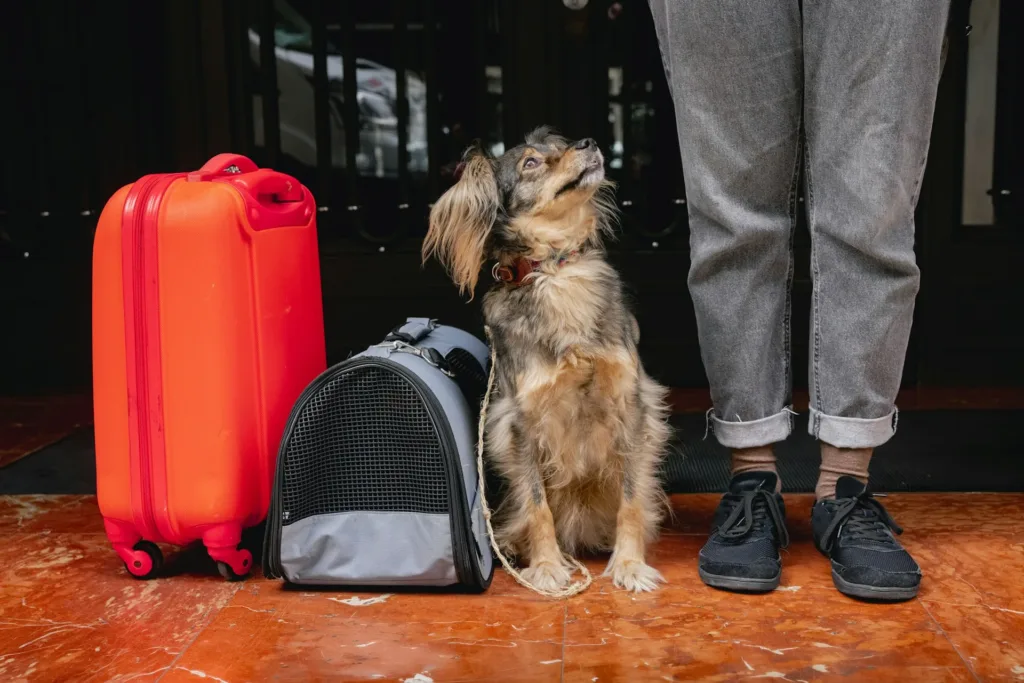
6. Make the carrier a happy place
Bring the carrier out a few weeks before the trip and leave it open at home. Toss treats inside, feed a meal or two in it and add a T-shirt you’ve worn so it smells like you. Then practice short zipped-up sessions and a few car rides. A dog that already likes its carrier has a much easier day.
On travel day
7. Feed light and walk long
A small meal a few hours before you leave is easier on the stomach than a full bowl right before the flight. Keep water available until you head out. Then go for a long walk or a good play session so your dog is ready to nap, and give one more potty break before security. For more pet care basics, see our guide to bathing your pet at home.
8. Give yourself extra time at the airport
With a pet you usually can’t check in fully online, so plan to see an agent at the counter, who will check your pet booking and papers. At security, expect to take your dog out of the carrier and carry it or walk it through while the empty carrier goes through the X-ray. A snug harness and leash make that part much easier. Look up the pet relief areas, ideally past security, and let the gate agent know you have a dog on board.
9. Settle in for the flight
Slide the carrier all the way under the seat in front of you and keep it zipped. On most airlines your dog stays in the carrier for the whole flight, even if the seat next to you is empty. A worn T-shirt, a favorite small blanket or a stuffed chew toy gives your dog something familiar. Stay calm yourself; dogs pick up on our nerves. On a long flight, rest your hand near the mesh so your dog can smell you.
10. Ask your vet before giving any sedative
It can be tempting to help a nervous dog sleep through the flight, but the AVMA says to talk to your vet before giving any tranquilizer or sedative. Sedatives can raise the risk of heart and breathing problems, and airlines generally don’t accept sedated pets. If your dog gets anxious, ask your vet about safer options, and try a calming wrap or a pheromone spray at home first so you know how your dog reacts. Once you’re home again, our tips on getting rid of pet smells help freshen up the car and the carrier.
Our Amazon picks for flying with a dog
Eight things that make the tips above easier: travel gear in the first row, and calming helpers for the cabin in the second. Check your airline’s size limits before you choose a carrier.
 Check price at Amazon
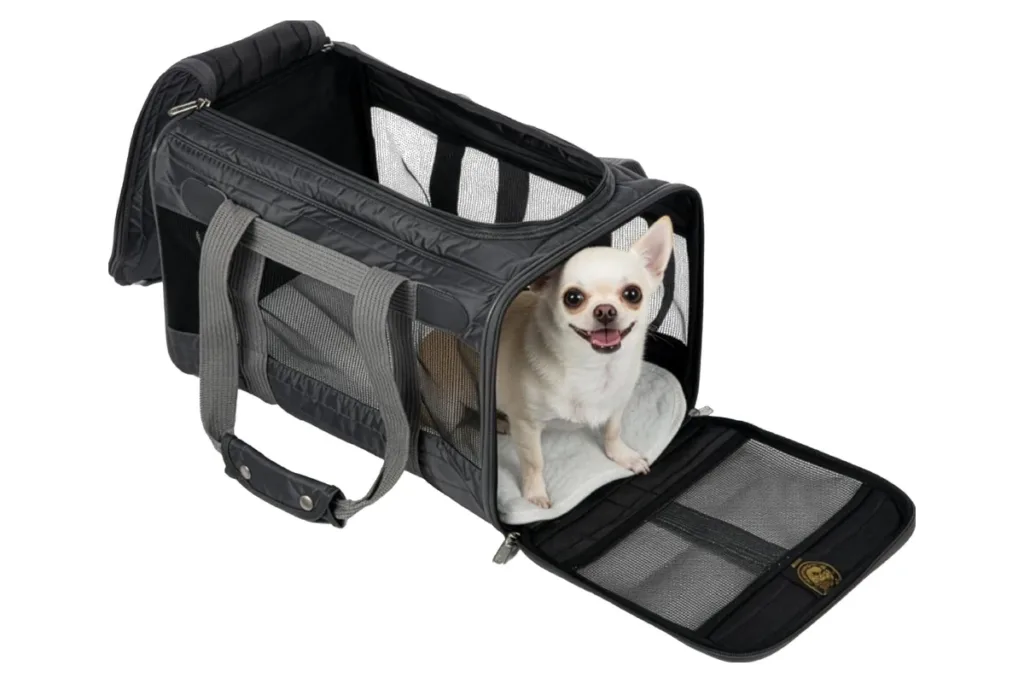
A carrier that fits under seats
The Sherpa Original Deluxe Travel Pet Carrier has a spring wire frame that lets it squeeze under airplane seats.
 Check price at Amazon
A padded harness for the airport
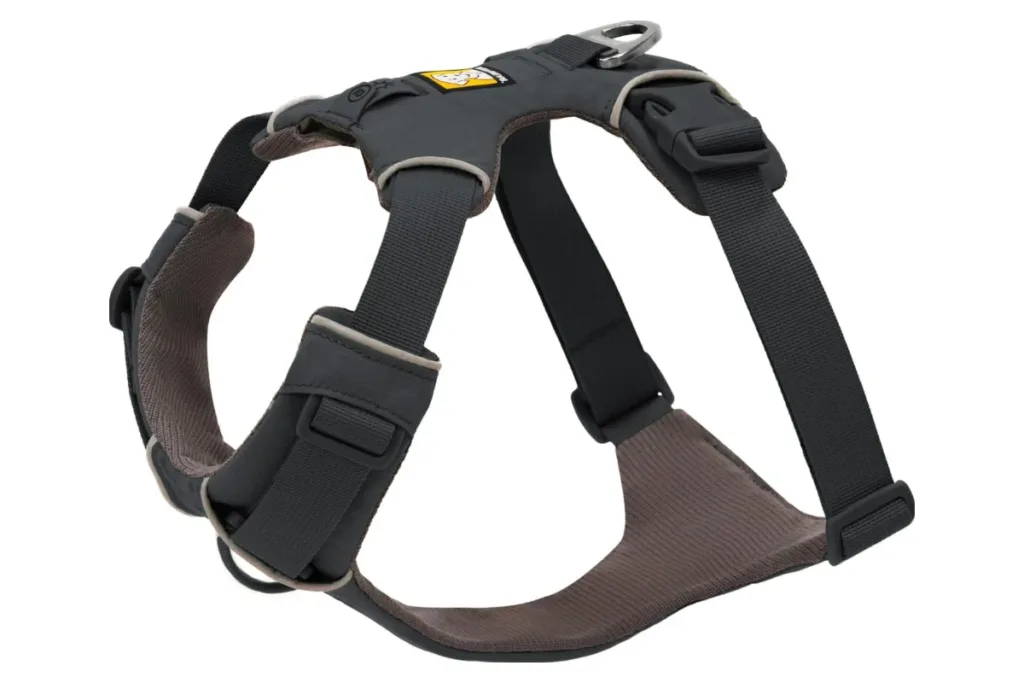
The Ruffwear Front Range Dog Chest Harness has foam padding, four points of adjustment and two leash spots.
 Check price at Amazon
Pads for little accidents
Fold one of the Amazon Basics Dog and Puppy Pee Pads into the carrier base. Quick-dry top, plastic lining.
 Check price at Amazon
A bowl that packs flat
The Kurgo Collaps-A-Bowl folds flat when empty and is made of BPA-free, food-grade silicone.
 Check price at Amazon
A chew to keep them busy
Stuff the KONG Classic Dog Toy for small dogs with treats before you leave for the airport.
 Check price at Amazon
A cuddly heartbeat buddy
The Snuggle Puppy Junior Heartbeat Toy is a small plush with a heartbeat, made for dogs under 25 pounds.
 Check price at Amazon
A calming wrap
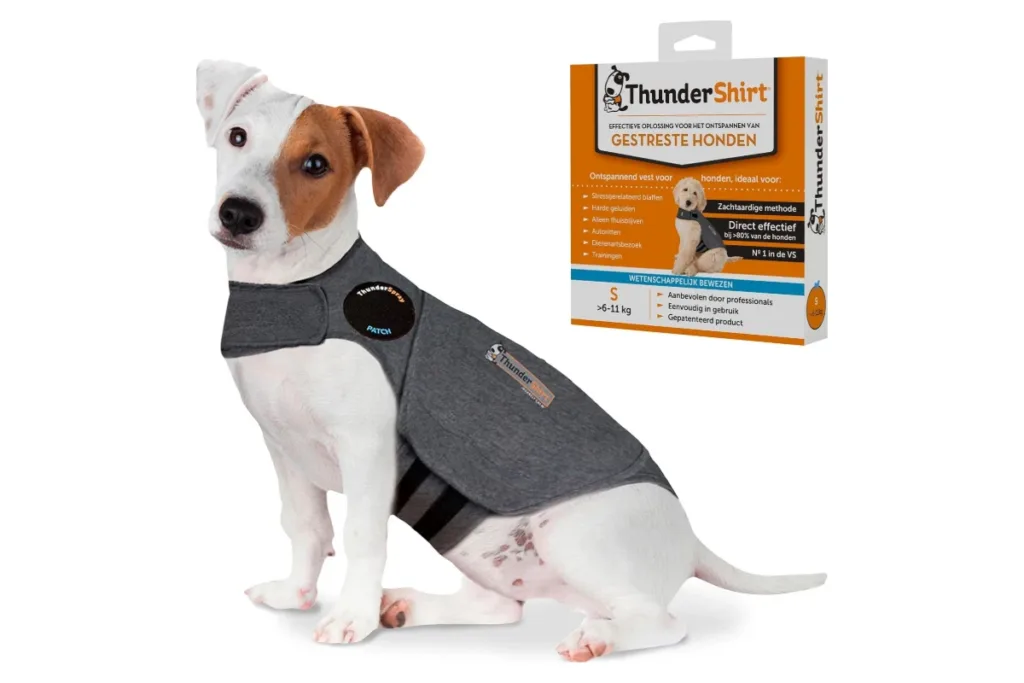
The ThunderShirt Dog Calming Vest gives gentle, steady pressure around the torso. Try it at home first.
 Check price at Amazon
A calming spray for the carrier
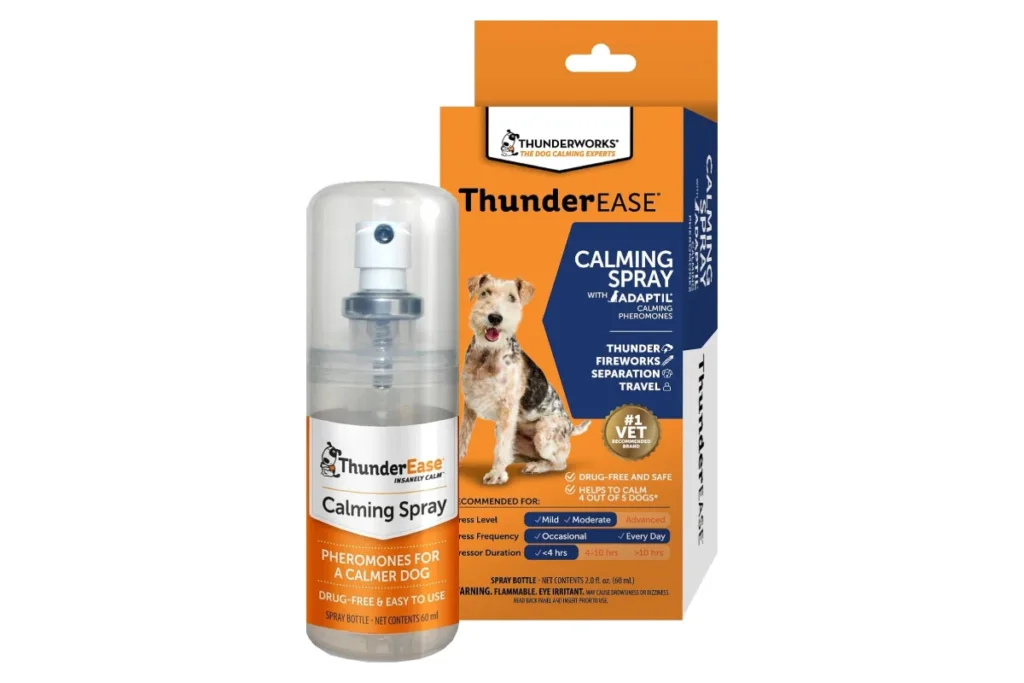
ThunderEase Pheromone Calming Spray mimics the calming pheromone a mother dog gives off. Spray a blanket or the carrier, not your dog.
Sources and further reading
- AVMA, Traveling with your pet FAQ, health certificate timing, sedatives, carrier fit
- USDA APHIS, Pet travel, accredited vet, endorsed health certificate
- CDC, Bringing a dog into the United States, dog import rules, Dog Importation Navigator
- Sherpa Original Deluxe Travel Pet Carrier, Charcoal Gray, Medium, Amazon, frame, mesh, zippers
- Ruffwear Front Range Dog Chest Harness, Basalt Gray, Small, Amazon, padding, adjustment, leash points
- Amazon Basics Dog and Puppy Pee Pads, 100 Count, Amazon, quick-dry surface, lining
- Kurgo Collaps-A-Bowl, Blue, Amazon, collapsible, material
- KONG Classic Dog Toy, Small, Amazon, stuffable
- Snuggle Puppy Junior Heartbeat Toy, Biscuit, Amazon, heartbeat, dog size
- ThunderShirt Dog Calming Vest, Heather Gray, Small, Amazon, gentle pressure
- ThunderEase Pheromone Calming Spray for Dogs, Amazon, pheromone, use
Changelog
- Written.
What we could not test
- We haven’t tested these products.
Questions
Can my dog sit on my lap during the flight?
On most airlines, no. A dog flying in the cabin as a pet stays in its carrier under the seat in front of you for the whole flight.
Can a large dog fly in the cabin?
Usually not. Most airlines only take dogs small enough to fit in a carrier under the seat. Larger dogs may fly in the cargo hold on some airlines. Trained service dogs follow separate rules, so check with your airline.
Does my dog need a health certificate for a domestic flight?
It depends on the airline and where you’re going. Ask your airline when you book, and if you need one, get it from a federally accredited vet within 10 days of your flight.
Should I sedate my dog for the flight?
Talk to your vet first. The AVMA says sedatives can raise the risk of heart and breathing problems, and airlines generally don’t accept sedated pets.