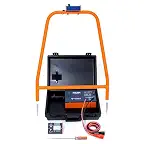
 TEMPO PE2003-G PulserBest overall
- Signal
- 2,400 V DC peak pulse
- Receiver
- A-frame with visual analog meter
- Transmitter battery
- 23 hours per charge
- Power
- 12 V rechargeable, 120 V charger included
Most recommended by reviewers
Check price at Amazon


How we make money. If you buy through our links we may earn a commission. It never changes what we recommend. Learn more ›
We earn a commission when you buy through our links, at no extra cost to you. How this works.
If a sprinkler zone has gone dead or the dog fence keeps failing, the break is somewhere under the lawn, and digging up the whole yard is the last thing you want to do. A wire break locator sends a signal down the buried line so you can trace where it is damaged.
Our No. 1 pick is the TEMPO PE2003-G, a pulser that sends a high-voltage signal into the earth at each fault and shows where it leaves the ground. It suits anyone with a serious buried-cable problem. Two cheaper options, the VISIOPROBE and the NOYAFA, cover everyday home and low-voltage jobs.
1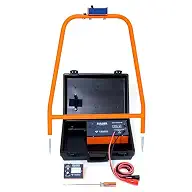 TEMPO PE2003-G Pulser | 2 NOYAFA NF-818LP | 3 KOLSOL F02 Fault Finder | |
|---|---|---|---|
| Best for | Best overall | Best budget | Best for quick finds |
| Detection depth | Not listed | Up to 2.6 ft | 2 to 3 ft |
| Tracing length | Not listed | Up to 1,000 ft | Up to 1,000 ft |
| Check price at Amazon | Check price at Amazon | Check price at Amazon |
TEMPO PE2003-G PulserBest overallMost recommended by reviewers
Check price at Amazon NOYAFA NF-818LPBest budget
 KOLSOL F02 Fault FinderBest for quick finds
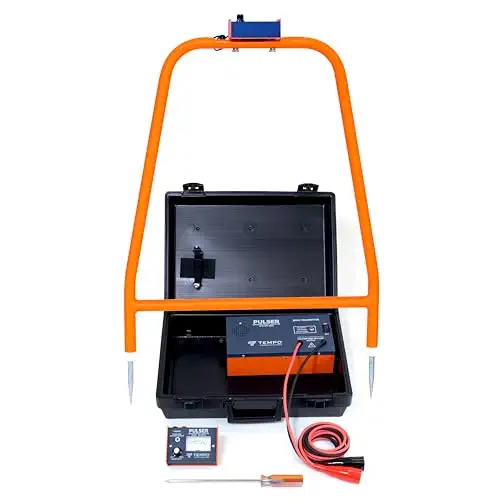


A pulser-style locator for serious buried-cable faults, including multiple breaks on one run.
Most recommended by reviewers
Check price at AmazonPrices and availability on Amazon change often.
The TEMPO PE2003-G is our top pick for anyone who needs a serious, complete kit for finding breaks in buried wire and cable.
The TEMPO pulses a 2,400 V DC peak signal that radiates into the earth at each fault, which is what lets it catch even small insulation breaks. Its A-frame receiver with a visual analog meter points toward the source, and owners on r/electricians say it is a reliable way to narrow down where a buried run has failed. It also finds multiple faults on a single wire, which helps you decide whether a run needs repair or full replacement.
The price is high for a homeowner dealing with a single sprinkler or fence problem. The transmitter runs 23 hours per charge and the kit includes a 120 V charger, lighter adapter and case, so you are paying for a complete professional-style setup. If you only need a quick check, the lower-cost options may be a better fit.
If it's not for you, the NOYAFA NF-818LP suits budget-minded homeowners tracing shallow dog fence or sprinkler lines, and the KOLSOL F02 suits quick finds around the yard where a light, portable tool matters most.


A lower-cost tracer with a break and short-circuit check, suited to dog fences and sprinklers.
Prices and availability on Amazon change often.


A compact, easy tool for quick checks on single-strand dog fence and irrigation wires.
Prices and availability on Amazon change often.
A homeowner with a dog fence or sprinkler problem usually needs a low-cost tracer. A contractor or someone chasing buried mains faults needs a pulser-style unit with more depth and multi-fault capability.
For serious buried-cable and insulation faults, the TEMPO PE2003-G is the strongest pick. For everyday dog fence and sprinkler wires, the NOYAFA NF-818LP is a practical choice at a much lower price.
The TEMPO PE2003-G can locate multiple breaks on one run. The NOYAFA NF-818LP's continuity and short-circuit check is useful for a first pass on low-voltage wiring.
Why trust ConsumerEcho
This shortlist is built from three in-stock Amazon listings for underground wire break locators, weighed against the features buyers compare: detection depth, signal method, power source and what comes in the kit. It also draws on manufacturer guidance and reader discussion about which tools suit low-voltage and professional work.
Our expert team tests products when it is needed and researches online and in interviews. Every guide is fact-checked and edited by a real person.
The ConsumerEcho editorial team · Updated Nov 16, 2026
How we pickEditorial standardsAffiliate disclosureReport a mistake
We earn a commission when you buy through our links, at no extra cost to you. It never decides the winner.