
 VEVOR 13-Gallon Push-Pull RollerBest overall
- Capacity
- 13 gallons (46 L)
- Material
- Heavy-duty steel frame
- Handle
- U-shaped push-pull
- Price
- See live Amazon price
Most recommended by reviewers
Check price at Amazon


How we make money. If you buy through our links we may earn a commission. It never changes what we recommend. Learn more ›
 VEVOR 13-Gallon Push-Pull RollerBest overallRunner-up2
 Agri-Fab Tow-Behind Poly RollerBest for towing
We earn a commission when you buy through our links, at no extra cost to you. How this works.
A lawn roller presses seed into soil and flattens small bumps, but the wrong size or material is a waste of money. Most home lawns do well with a roller around 24 to 36 inches wide that can be pushed or towed.
Our No. 1 pick is the VEVOR 13-Gallon steel roller for its push-pull handle and solid build at a fair price. The other picks cover poly drums, tow-behind sizes and larger capacities.
1 VEVOR 13-Gallon Push-Pull Roller | 2 Agri-Fab Tow-Behind Poly Roller | 3 VEVOR 61L Sand Water Roller | 4 Brinly Combination Poly Roller | 5 COSTWAY Push-Tow Sod Roller | |
|---|---|---|---|---|---|
| Best for | Best overall | Best for towing | Best budget | Best for poly durability | Best for storage |
| Capacity | 13 gallons (46 L) | 550 lb water | 61 L | 28 gallons (270 lb) | 17 gallons (63 L) |
| Material | Heavy-duty steel frame | Poly drum | High-carbon steel drum | Poly drum | Metal frame, powder-coated |
| Handle | U-shaped push-pull | Not listed | Push style | Not listed | Grip handle, leans for storage |
| Check price at Amazon | Check price at Amazon | Check price at Amazon | Check price at Amazon | Check price at Amazon |
VEVOR 13-Gallon Push-Pull RollerBest overallMost recommended by reviewers
Check price at Amazon Agri-Fab Tow-Behind Poly RollerBest for towing
 VEVOR 61L Sand Water RollerBest budget
 Brinly Combination Poly RollerBest for poly durability
 COSTWAY Push-Tow Sod RollerBest for storage


A steel push-pull roller that holds 13 gallons of water or sand, suited to small to medium home lawns.
Most recommended by reviewers
Check price at AmazonPrices and availability on Amazon change often.
We'd pick the VEVOR 13-Gallon Push-Pull Lawn Roller as the best overall choice for most home lawns, thanks to its sturdy steel frame and easy-to-handle U-shaped handle.
The heavy-duty steel frame gives this roller a solid, stable feel, and the U-shaped handle lets you push or pull it with little effort. A sealed plug means you're less likely to lose it mid-job, and the 13-gallon drum holds 46 liters of sand or water to firm up seed and soil. It also hangs in a garage or shed when you're done. It's a practical all-rounder for compacting soil, leveling sod, and smoothing a lawn.
Steel rollers are heavier to move around, especially once filled, and reviewers note they can rust in damp conditions. If you want to avoid rust concerns or plan to tow with a tractor, the poly options may suit you better.
If it's not for you, the Agri-Fab 18x48 suits large lawns that you can tow behind a garden tractor, while the Brinly 28-Gallon poly roller suits buyers who want a roller that won't dent or rust.


A tow-behind poly drum that holds 550 pounds of water, for bigger lawns with a garden tractor.
Prices and availability on Amazon change often.


A 61-litre roller with a push handle and high-carbon steel drum, a solid mid-price choice.
Prices and availability on Amazon change often.
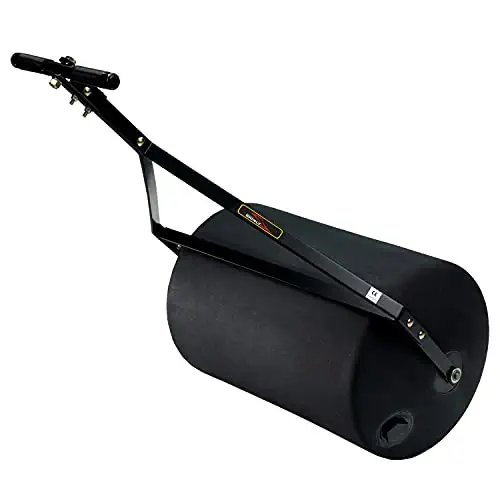

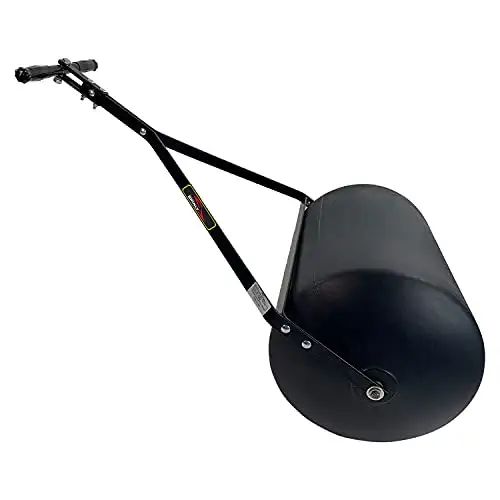


A poly push-pull roller holding 28 gallons, with a tethered plug that stays attached when filling and emptying.
Prices and availability on Amazon change often.


A powder-coated steel roller that holds 17 gallons and can be leaned against a wall for storage.
Prices and availability on Amazon change often.
Most homeowners should look for a roller around 24 to 36 inches wide. Poly is lighter and does not rust, so it is the better all-round choice. Steel is more durable and heavy-duty, but it is heavier to move and can rust in damp conditions.
Fill with water when you want the roller to be lighter to move; sand is permanent but makes it heavier. Empty water after each use so it does not sit inside the drum.
Rolling compacts soil and does little for long-term smoothness. Reviewers recommend topdressing with a soil and sand mix to fill low spots, and aerating before overseeding. Roll only when the ground is damp but not waterlogged.
Roll in spring after overseeding, when the soil is damp but not waterlogged. Dry soil does little, and wet soil can seal the surface. Pair rolling with aeration, since rolling alone can compact the lawn.
Reviewers suggest a filled roller of around 200 to 400 pounds is enough for most home lawns. A roller that is too heavy will compact soil too much on a standard yard.
For most homeowners, poly is the better choice because it is lighter and does not rust. Steel is more durable and heavy-duty, but it is harder to move and needs protection from damp.
For most residential lawns, 24 to 36 inches wide works best. Larger rollers suit big fields or towing behind a tractor. Check the listed capacity against how far you need to push or pull.
Prices on Amazon change, so check the live price on each listing. Models here range from budget push rollers to larger tow-behind poly drums.
Rolling only flattens small bumps. For low spots, fill with topsoil or sand and let the lawn grow through. Knock out small lumps with a shovel or mattock before rolling.
Why trust ConsumerEcho
Built from 5 Amazon listings that are in stock now, weighed against expert reviews and owner discussions on lawn care forums. Capacity, material and how each roller is moved were the main factors.
Our expert team tests products when it is needed and researches online and in interviews. Every guide is fact-checked and edited by a real person.
The ConsumerEcho editorial team · Updated Nov 16, 2026
How we pickEditorial standardsAffiliate disclosureReport a mistake
We earn a commission when you buy through our links, at no extra cost to you. It never decides the winner.
 The Best Airbrush Kits with Compressor for Models
 The Best AWD Robot Mowers for Your Lawn
 The Best Drill Bits for Hardened Steel
 The Best Outdoor Mouse Traps
 The Best Pool Line Blowers
 The Best Portable Propane Tankless Water Heaters
 The Best Seat Covers for Subaru Forester
 The Best Sewing Machines for Quilting
