
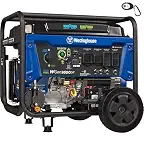
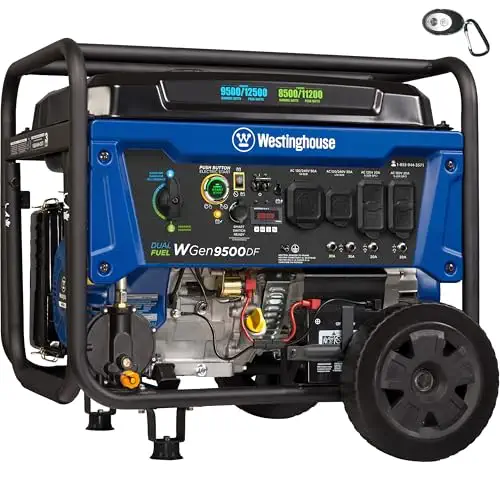
 Westinghouse 12500 Dual FuelBest overall
- Running power
- 9,500 W gasoline / 8,500 W propane
- Peak power
- 12,500 W gasoline / 11,200 W propane
- Fuel tank
- 6.6 gal
- Run time
- Up to 12 hours
Most recommended by reviewers
Check price at Amazon


How we make money. If you buy through our links we may earn a commission. It never changes what we recommend. Learn more ›
 Westinghouse 12500 Dual FuelBest overallRunner-up2
 Generac 26kW Whole HomeBest whole-home backup
We earn a commission when you buy through our links, at no extra cost to you. How this works.
When the power goes out, the questions come fast: will the fridge keep running, will the furnace fan turn on, and can you keep the lights and phone charged? Choosing a home generator comes down to matching wattage to the things you need most, picking a fuel you can actually store, and deciding how much noise and maintenance you can live with.
Our top pick is the Westinghouse 12500 Watt Dual Fuel Home Backup Portable Generator. It offers enough running power for essentials in most homes, runs on gasoline or propane, and includes a transfer-switch-ready outlet. The other two picks cover a larger whole-home standby setup and a quieter inverter option for smaller loads.
1 Westinghouse 12500 Dual Fuel | 2 Generac 26kW Whole Home | 3 Jackery HomePower 3000 | |
|---|---|---|---|
| Best for | Best overall | Best whole-home backup | Best quiet battery option |
| Fuel tank | 6.6 gal | Natural gas or propane | Not listed |
| Warranty | 3-year limited | 5-year limited | Not listed |
| Check price at Amazon | Check price at Amazon | Check price at Amazon |
Westinghouse 12500 Dual FuelBest overallMost recommended by reviewers
Check price at Amazon Generac 26kW Whole HomeBest whole-home backup
 Jackery HomePower 3000Best quiet battery option


A dual-fuel portable generator with enough output for essentials and a transfer-switch-ready outlet.
Most recommended by reviewers
Check price at AmazonPrices and availability on Amazon change often.
For a home power outage, the Westinghouse 12500 Watt Dual Fuel is our pick for most households, because it pairs strong running power with the flexibility to run on gasoline or propane.
The Westinghouse is rated for 9,500 running watts on gasoline and 8,500 on propane, the highest running output of the picks we compared. It runs up to 12 hours on its 6.6 gallon tank and includes a transfer-switch-ready 30A outlet for wiring into a home, plus a remote key fob for electric start. Owners on the product's comment threads note that it has far more wattage than many people need for basic backup.
The 6.6 gallon tank limits how long it can run before refueling, and owners report it is loud and heavy to move. A commenter also found it loud in a quiet neighborhood, so it is best placed away from sleeping areas.
If it's not for you, the Generac 26kW Whole Home Generator suits people who want automatic whole-house coverage and can accept professional installation and a higher price, while the Jackery HomePower 3000 suits anyone who needs silent, fume-free indoor backup and can accept shorter runtime.


A permanently installed standby generator that starts automatically and powers the whole house.
Prices and availability on Amazon change often.


A battery power station with solar panels for quiet, fume-free backup that runs indoors.
Prices and availability on Amazon change often.
Most single-family homes are comfortably served by a 7,000 to 10,000 watt generator for basic needs, while larger homes or those with a well pump and central air may need 12,000 to 20,000 watts. Add up the wattage of what you want to run, then size up: motors need extra power to start.
Most homes need a 7,000 to 10,000 watt generator for essentials. Whole-house coverage with air conditioning or a well pump usually needs 12,000 to 20,000 watts, which means a standby unit.
The common rule is to keep continuous load at about 80% of the rated running watts so the unit runs cooler and lasts longer. Size the generator with that margin in mind.
Among the battery stations on this shortlist, the Jackery HomePower 3000 pairs 3,600 W output with 3,072 Wh of capacity and solar recharging. Battery runtime depends on how much you draw.
Why trust ConsumerEcho
This shortlist is built from three Amazon listings that are in stock now, weighed against expert reviews and owner discussions about sizing, fuel type and running costs. We kept products whose listed power output matches what homes typically need during an outage.
Our expert team tests products when it is needed and researches online and in interviews. Every guide is fact-checked and edited by a real person.
The ConsumerEcho editorial team · Updated Nov 16, 2026
How we pickEditorial standardsAffiliate disclosureReport a mistake
We earn a commission when you buy through our links, at no extra cost to you. It never decides the winner.