 Franklin ProSensor M210Best overall
- Sensors
- 13
- Detection depth
- 1.7 in
- Power
- 2 AA batteries
- Live wire detection
- Yes
Most recommended by reviewers
Check price at Amazon


How we make money. If you buy through our links we may earn a commission. It never changes what we recommend. Learn more ›

Reviewed by
Fact checker and editor
An experienced e-commerce editor and fact-checker specialising in product information, pricing, specifications and online retail content.
We earn a commission when you buy through our links, at no extra cost to you. How this works.
Hanging a shelf or a TV means finding the studs first, and a cheap stud finder can point you at the wrong spot. Franklin's sensor models are the brand owners and reviewers talk about most, and the ProSensor M210 is the one most often named as the best of the line.
The M210 is our No. 1 pick for heavy jobs. The other picks cover budget use, deep scanning through thick walls and a cheaper 9-sensor model for light work.
1 ProSensor M210 | 2 ProSensor M150 | 3 ProSensor MAX | 4 ProSensor 710+ | |
|---|---|---|---|---|
| Best for | Best overall | Best budget | Best for thick walls | Best mid-range |
| Sensors | 13 | 9 | 13 | 13 |
| Detection depth | 1.7 in | 1.5 in | 2.5 in | 1.6 in |
| Power | 2 AA batteries | 2 AAA batteries | Not listed | Batteries (not rechargeable) |
| Live wire detection | Yes | Yes | Not listed | Not listed |
| Built-in level | Not listed | Not listed | Yes | Yes |
| Check price at Amazon | Check price at Amazon | Check price at Amazon | Check price at Amazon |
Franklin ProSensor M210Best overallMost recommended by reviewers
Check price at Amazon Franklin ProSensor M150Best budget
 Franklin ProSensor MAXBest for thick walls
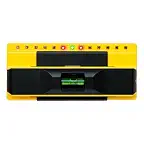 Franklin ProSensor 710+Best mid-range


The Franklin model most reviewers name as the best of the line, for heavy-duty jobs like TV mounts.
Most recommended by reviewers
Check price at AmazonPrices and availability on Amazon change often.
The Franklin ProSensor M210 is our pick for the best Franklin stud finder, because its 13 sensors show the full width of a stud rather than just a single beep.
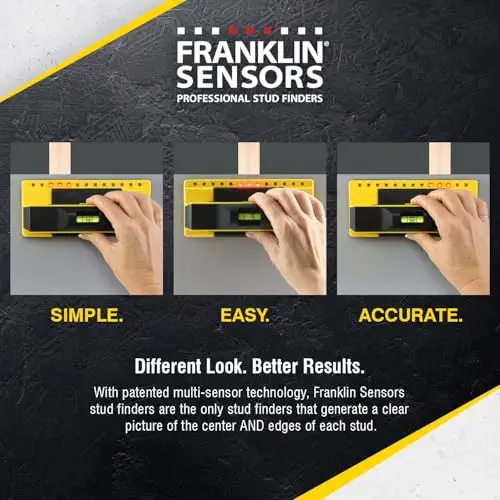
The M210 has 13 sensors and a row of LEDs, so you can see the whole stud, its edges, and where the center falls, with no calibration needed before scanning. Owners on r/DIY say the row of LEDs shows the whole scan, which makes it easier to find both edges of a stud. One owner reports it was the only unit that could find studs behind lath and plaster, though not every time. It also adds a built-in bubble level and live AC wire detection.
Live-wire detection is an extra warning, not a substitute for turning off power. Owners note it can mistake drywall joints for horizontal studs, and the electrical detection is weaker than the stud detection. It takes two AA batteries, and one owner says fresh alkaline batteries are needed for it to work properly.
If it's not for you, the M150 suits anyone on a tighter budget with fewer sensors and a shallower 1.5 in scan, while the MAX, with its 2.5 in deep-scan mode, is the one to choose for thick or layered walls.


A cheaper Franklin with live wire detection, for lighter projects.
Prices and availability on Amazon change often.


Deep scanning for thick walls, plaster and double layers of drywall.
Prices and availability on Amazon change often.
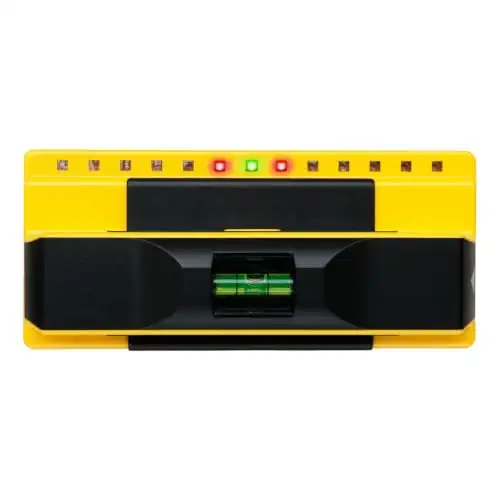


A 13-sensor Franklin with a built-in bubble level and ruler.
Prices and availability on Amazon change often.
For heavy mounts such as TV brackets and cabinets, the M210 or the MAX give the most confidence. For everyday picture hanging, the 710+ or M150 cover most jobs at a lower price. The MAX is the only model here made for thick walls.
Franklin Sensors is the brand most often named by reviewers and owners. Within its line, the ProSensor M210 is the model most often called the best overall.
The M210 has 13 sensors and a 1.7-inch listed depth, suited to heavy jobs on standard walls. The MAX has 13 larger sensors, a 2.5-inch depth and two detection modes for thick walls and plaster.
Place the unit flat on the wall, press and hold the button, and slide it slowly across the wall. No calibration is needed on most models. Watch the LED row for the stud's edges and the centre light.
The LEDs show a stud's edges and centre as you move across the wall. Scan in several places and check that readings agree before you drill.
Some owners report success on plaster, but reviewers note electronic stud finders struggle on lath and plaster. A magnet that finds the lath nails often works better there.
Meet the reviewer
Fact checker and editor
An experienced e-commerce editor and fact-checker specialising in product information, pricing, specifications and online retail content. Focused on ensuring accuracy, credibility and consumer confidence through clear, reliable and informative content.
Why trust ConsumerEcho
four Amazon listings were checked for stock and price before we chose. Picks were weighed on the feedback owners and reviewers gave about sensor design, deep scanning and how well each model handles plaster walls.
Our expert team tests products when it is needed and researches online and in interviews. Every guide is fact-checked and edited by a real person.
The ConsumerEcho editorial team · Updated Nov 16, 2026
How we pickEditorial standardsAffiliate disclosureReport a mistake
We earn a commission when you buy through our links, at no extra cost to you. It never decides the winner.